
Star Wars, the renowned franchise, will be celebrating its 50th anniversary next year in 2027. The saga has been translated into more than 50 languages, including the indigenous languages Ojibwe and Navajo. The films themselves feature between 30 and 70 different languages, including Huttese, Shyriiwook, and Ewokese. C-3PO is perhaps the gold (literally and figuratively) standard when it comes to multilingual mastery. In fact, the droid boasts fluency in more than 6 million forms of communication.
Hope for the Welsh Language
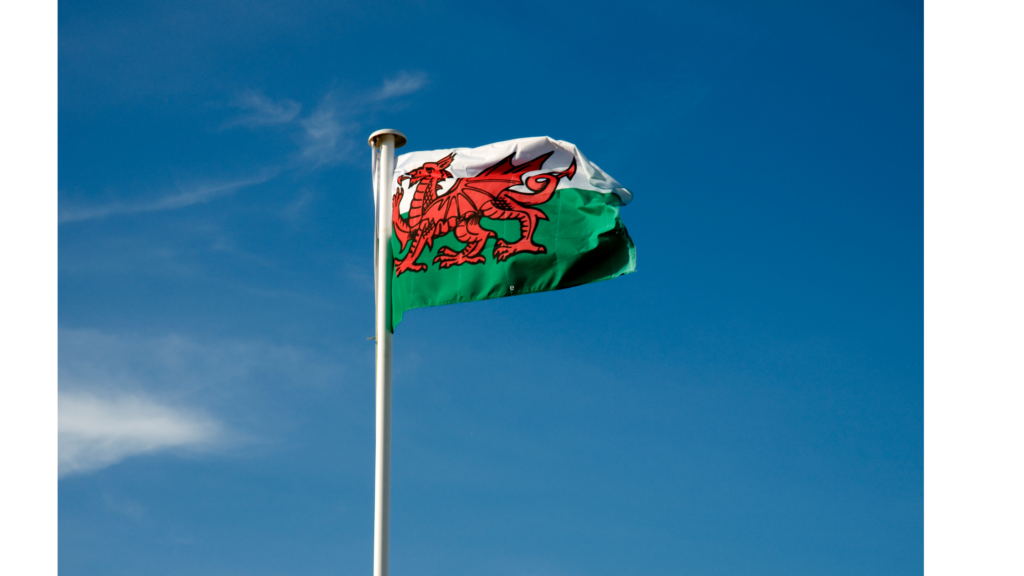
With linguistic diversity a feature both within and without the Star Wars saga, the linguistic universe has just expanded further. The franchise has added a new star to its multilingual galaxy: Welsh. The first film in the original trilogy released in 1977, later titled Star Wars: Episode IV – A New Hope, has been dubbed into Welsh. This new dub will allow Welsh speakers to enjoy the film with the added emotional resonance of watching in one’s native language. The Welsh language channel S4C will be broadcasting the Welsh dub on Christmas Day, with the film also available on its platforms.
The release, produced by Lucasfilm and Disney, and in partnership with both S4C and Creative Wales (an agency belonging to the Welsh Government), also supports objectives to increase the number of Welsh speakers and to preserve the Welsh language. With their Welsh language goals in mind, the Welsh government invested £100,000 into the project. The dubbing of a hugely popular piece of cultural history such as the Star Wars franchise into Welsh is hoped to inspire a new wave of Welsh language speakers. The release might just give the language A New Hope.
Acting Talent
The Welsh-language version (Star Wars: Gobaith Newydd) directed by Ellyn Stern, will feature acclaimed Welsh actors. These include brothers Rhys Ifans and Llyr Ifans (as Obi-Wan Kenobi and C-3PO), Matthew Rhys as Han Solo, Aimee-Ffion Edwards as Princess Leia, and Osian Morgan as Luke Skywalker. And with character names like Skywalker and Jabba the Hutt (originally translated into French as “Jabba le Forestier” (“Jabba the Forest Worker”)), already you can sense some of the challenges for translation.
The Welsh Connection
Building the Starship
If you think that this is the galaxy’s first foray into “the land of castles”, you are mistaken. The Millennium Falcon starship was constructed in a hangar at Pembroke Dock in 1979, for the release of the 1980 sequel The Empire Strikes Back. With the starship having featured in the previous film using more rudimentary forms, the director sought to create a large, mobile, full-scale model for the sequel. While filming took place at Elstree Studios in Hertfordshire, George Lucas settled on the Pembroke site due to the skilled workforce of the engineering company Marcon Fabrications and the space and discretion of the hangar, previously used to build aircraft during World War II. With the need for secrecy, the starship construction operation also had its own codename: “Magic Roundabout”. Nevertheless, the locals needed no wayfinder to uncover the project.
A Director and a Puppeteer
Some of the key figures involved in the production and operation of the films hailed or later settled in Cymru. The director of the third film in the original trilogy, Return of the Jedi was Cardiff-born director Richard Marquand. And in this more labour-intensive era of film production Jabba the Hutt was the result of a team of puppeteers. Three worked from the inside of the structure and others worked from the outside. Toby Philpott, a street performer and puppeteer and later computer technician at Cardiff Central Library became a puppeteer for Jabba the Hutt in Return of the Jedi.
The Welsh connection does not stop there. Later spin-offs of the Star Wars franchise have ties to Wales. The filming of the Disney+ series The Acolyte took place in various locations around Wales. These included the Bannau Brycheiniog (Brecon Beacons).
Challenges of Translating the Star Wars Universe
Translating Non-Human Characters
But with this new dub, the translation was surely not all smooth astrogation. Llyr Ifans commented on the more poetic nature of Welsh compared to English. The differences in length could present a challenge when translating the shorter, more compact dialogues and synchronising the translation with the timeframes and lip movements of the original. While recording their dialogues, voice directors help the voice actors recreate the rhythm and emotion of the original.
With a fictional galaxy such as Star Wars, full of diverse characters, planets, and species, many in non-human and masked forms such as giant slugs, robotic droids, fur-covered Wookiees and Ewoks, and armoured villains, directors had to find a way to portray these characters’ emotions. This can be more difficult without the communicative modes of facial expression or speech. For dubbing, voice actors face the challenge of both replicating the emotion and personality of the original characters, while also facing this same challenge of conveying emotion through masks and non-human forms.
Star Wars Terminology
Star Wars is a fictional sci-fi universe with plenty of terms unique to this world. These include place and character names, social systems and hierarchies, equipment such as lightsabers, starship navigation and mechanics, slang terms. And outside of the unique terminology, there is also the case of speed and timing, such as translating compact witty dialogues in English into a language of a more lyrical nature, while matching the timings and lip movements, tone and emotion of the original. The translation of certain terms into different languages has also changed as the franchise gained popularity. Certain vocabulary and phrases entered popular culture. Some terms that were originally translated have been kept in English in later instalments as they became more familiar among audiences.
Another particularity of the Star Wars universe that could prove challenging in translation is Yoda and his manner of speaking. Yoda often speaks in an Object-Subject-Verb format, distinguishing him from other characters and giving him an air of wisdom. English uses a Subject-Verb-Object structure, while Welsh uses a Verb-Subject-Object format. Though the character does not appear until the second film in the original trilogy, any future dubs would need to find a way to distinguish Yoda in a way that can similarly convey his wise persona.
Conclusion
With the release scheduled for Christmas Day, the Welsh dub is a big milestone for the Welsh language. It will provide the opportunity for Welsh speakers to enjoy the film, for the first time or anew, in their native language. The dubbing is also extending the historical connection between Wales and the Star Wars franchise. And, as Llyr Ifans commented, C-3PO is getting the opportunity to add one further language to his belt.
If you would like to learn more about preserving endangered or indigenous languages, you can read our blog post here.
Alternatively, if you would like help translating your project into Welsh or any other language, don’t hesitate to get in touch with us here!
13 August 2026 09:55